Hill. Reenactment
Izvor Park & National Museum of Contemporary Art (MNAC), Bucharest
public performance 03.11.2024 / exhibition 03.11 – 10.12.2024 /
outdoors installation 03.11.2024 – ongoing
Concept & curation Ioana Marinescu
Project coordination & choreography Smaranda Găbudeanu, Iulia Mărăcine
Workshop coordination & technical support Thomas Goodey, Ioana Marinescu, Lucian Călugărescu, Ion Molete
Archival research & documentation Costin Gheorghe, Cristian Văraru
Performance coordination Andreea David, Katia Pascariu, Eliza Trefaș
Sound installation Maria Balabaș, Mihai Balabaș
Filming & editing Laurențiu Calciu, Mircea Topoleanu
MNAC team Sandra Demetrescu, Mălina Ionescu, Mădălina Tichie
Produced by PETEC (The Books and Theatre Association)
Special thanks to former inhabitants of the demolished districts, the architecture students involved in the workshops and UAUIM team, participants in the public performance, the extended team of the Hill. Reenactment project (Dana Custrin, Anca Spiridon, Carmen Zmaranda, Raymond Bobar, Dan Roșca)
Photos Irinel Cîrlănaru (IC), Ionuț Macri, Ioana Marinescu (IM), Eliza Mureșan (EM), Maria Năstase (MN), Mădălina Tichie (MT/MNAC)
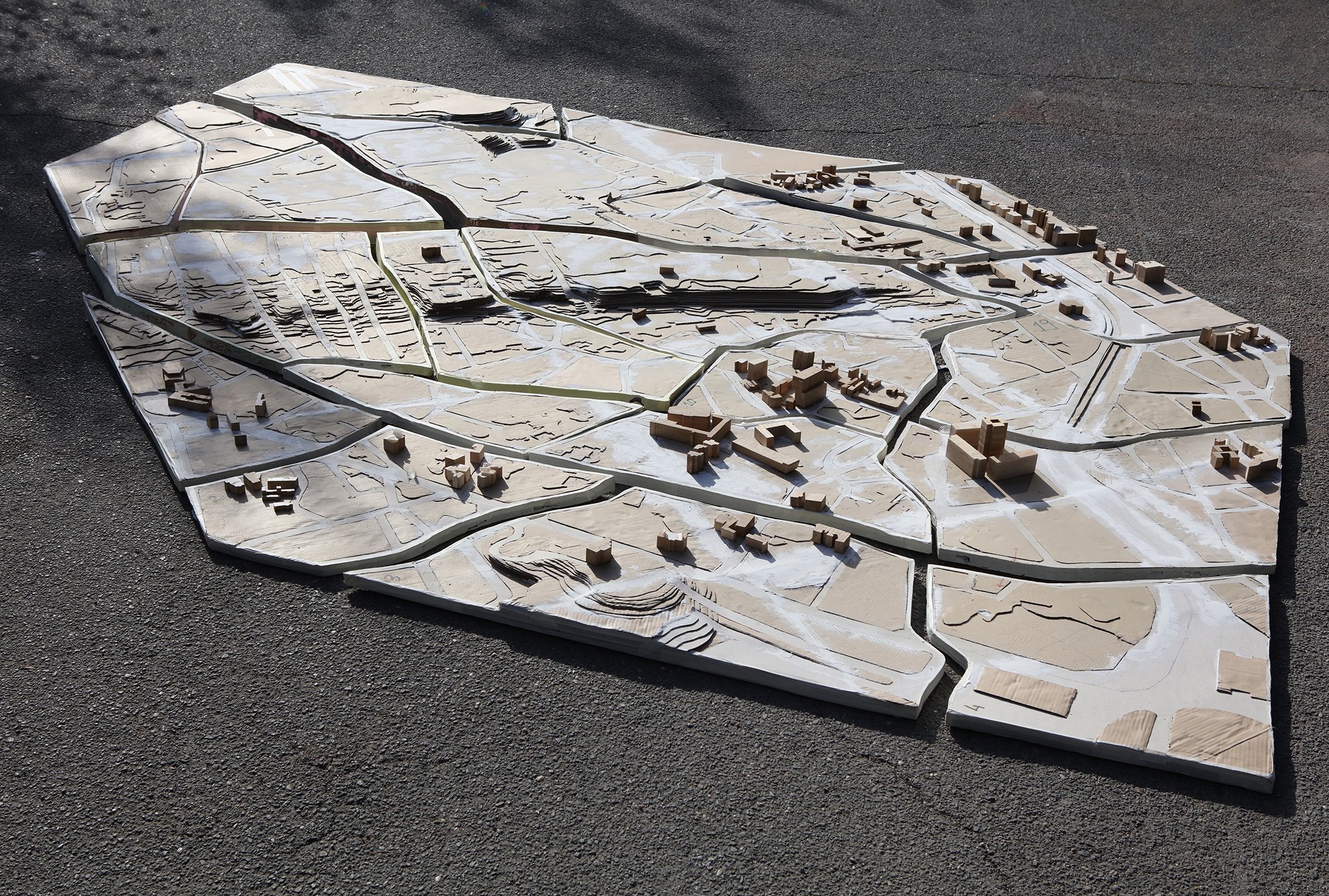
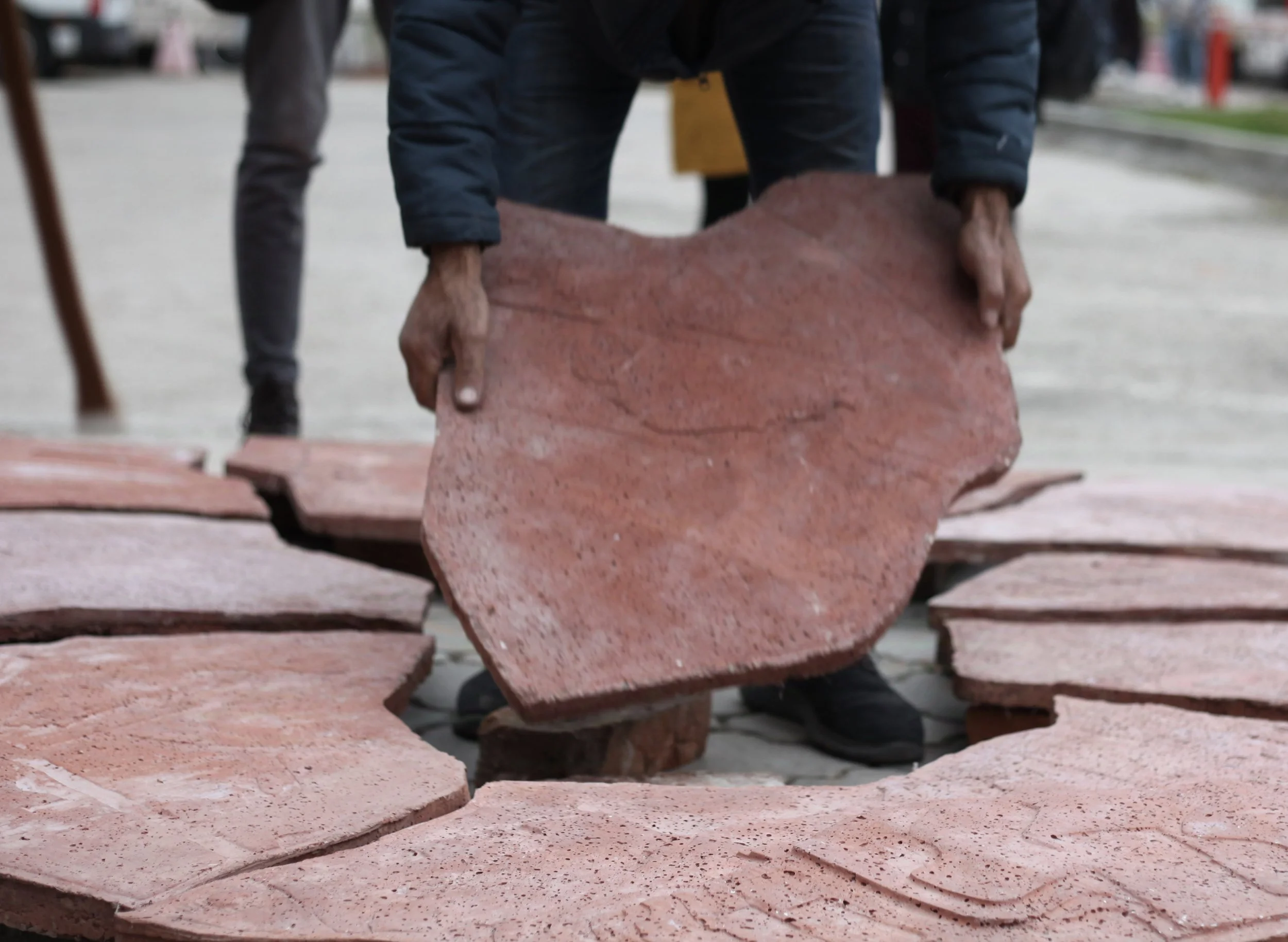
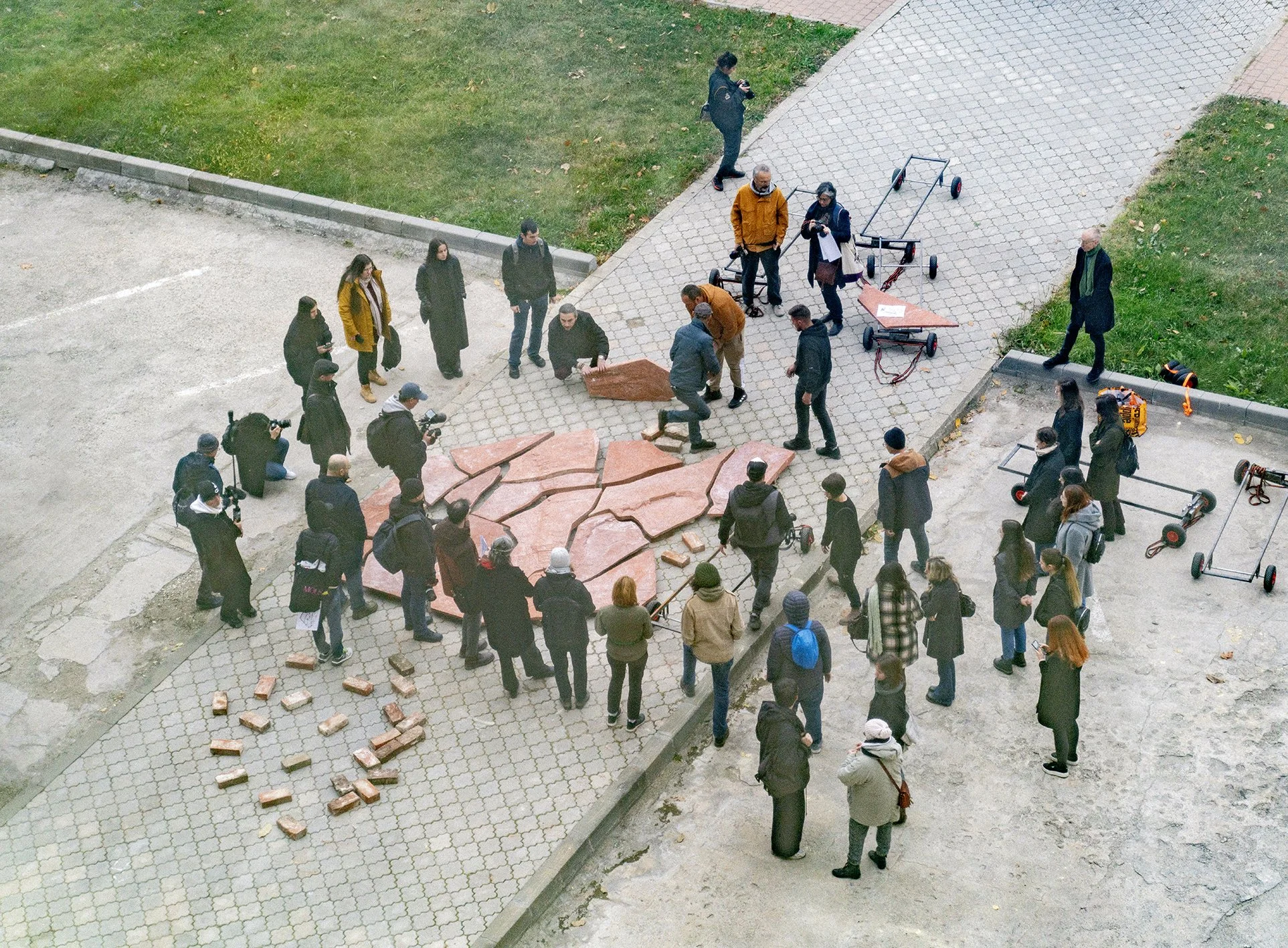
Hill. Reenactment is a participatory art project that acknowledges the irreversible losses caused by the totalitarian demolitions of the 1980s in Bucharest, bringing to the fore the story of the former Arsenal Hill, where the National Museum of Contemporary Art now stands. A large-scale sculptural model reproduces its topography at a 1:500 scale.
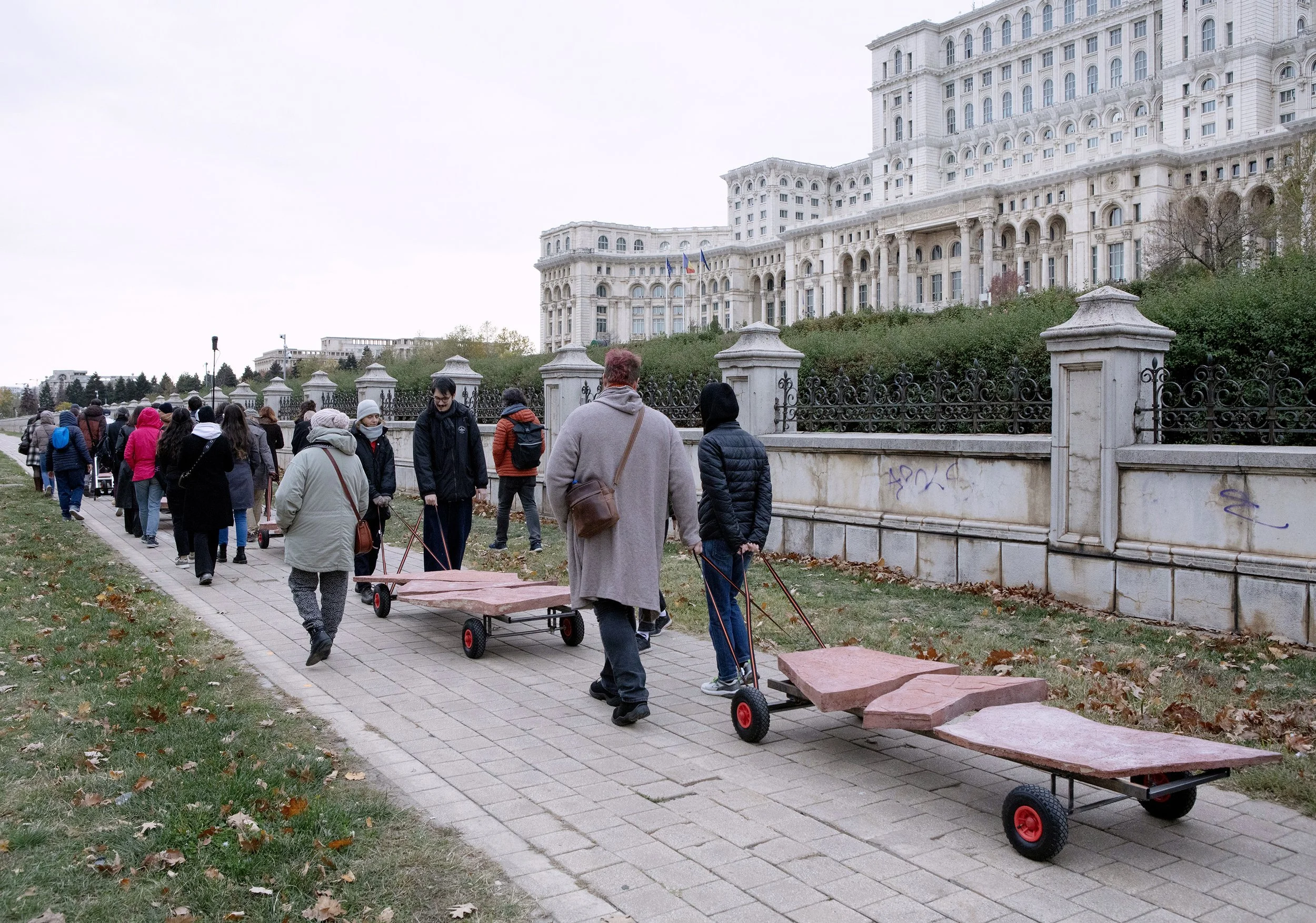
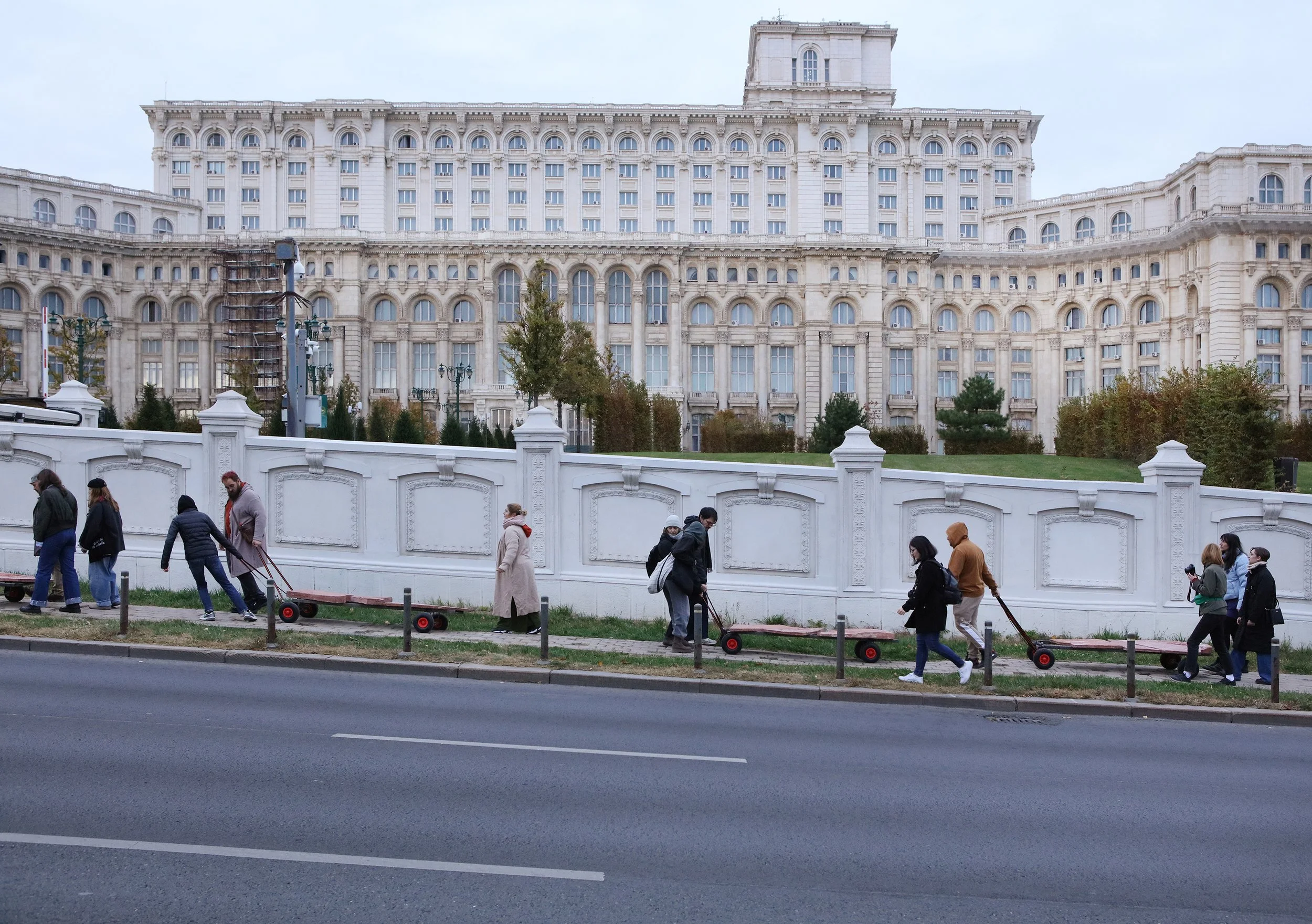
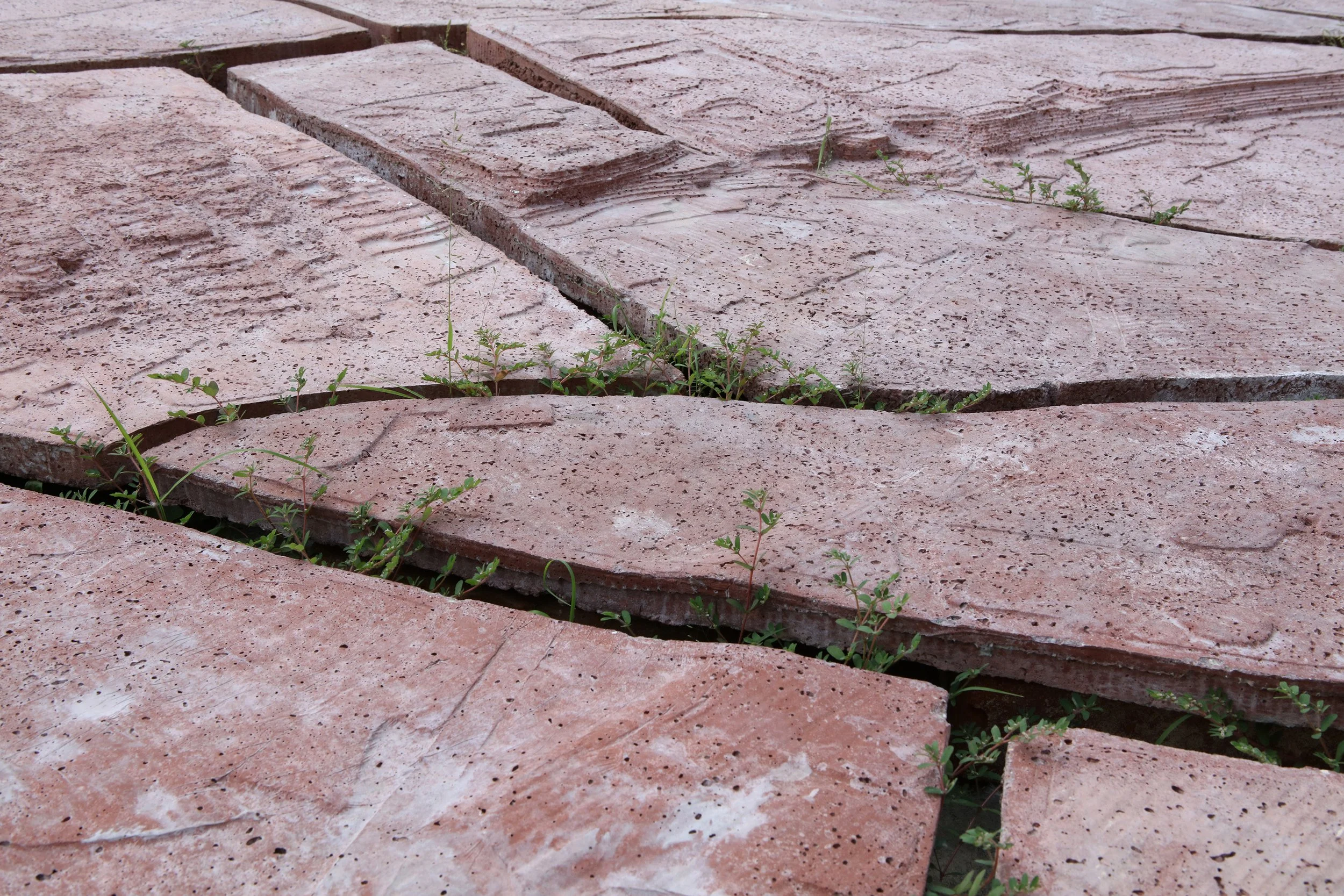
Concrete fragments of the model were carried by participants through the former demolished neighbourhoods (now Izvor Park) up to the museum housed within Ceaușescu's People's Palace. The route symbolically retraced, in reverse, the forced exodus of the 1980s, also evoking the absurd relocation of churches on railway tracks. The heavy concrete slabs were then laid on a bed of salvaged bricks, forming a hexagonal puzzle in front of the museum. A missing fragment at the centre suggests the impossibility of full reconstruction.
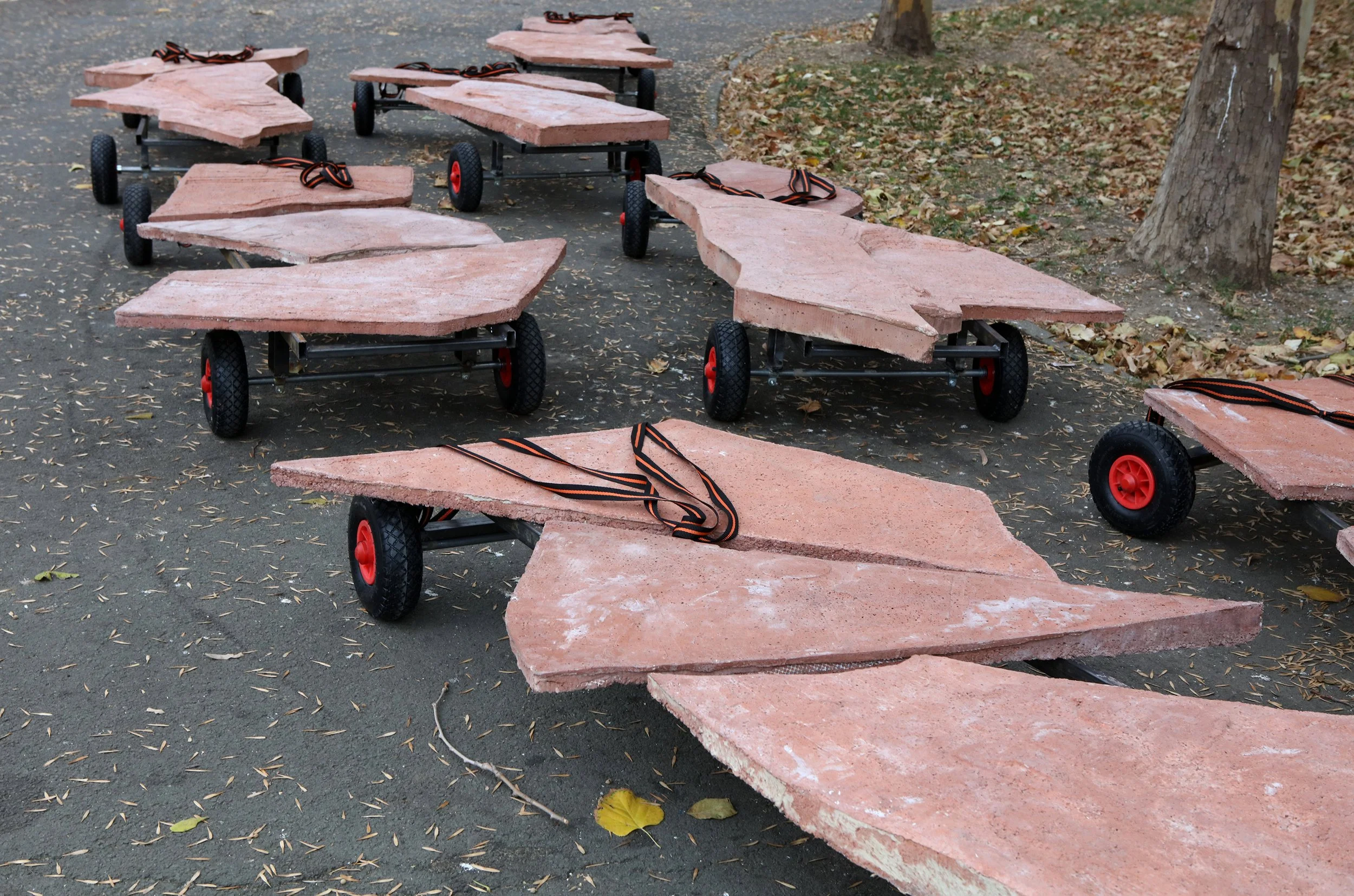
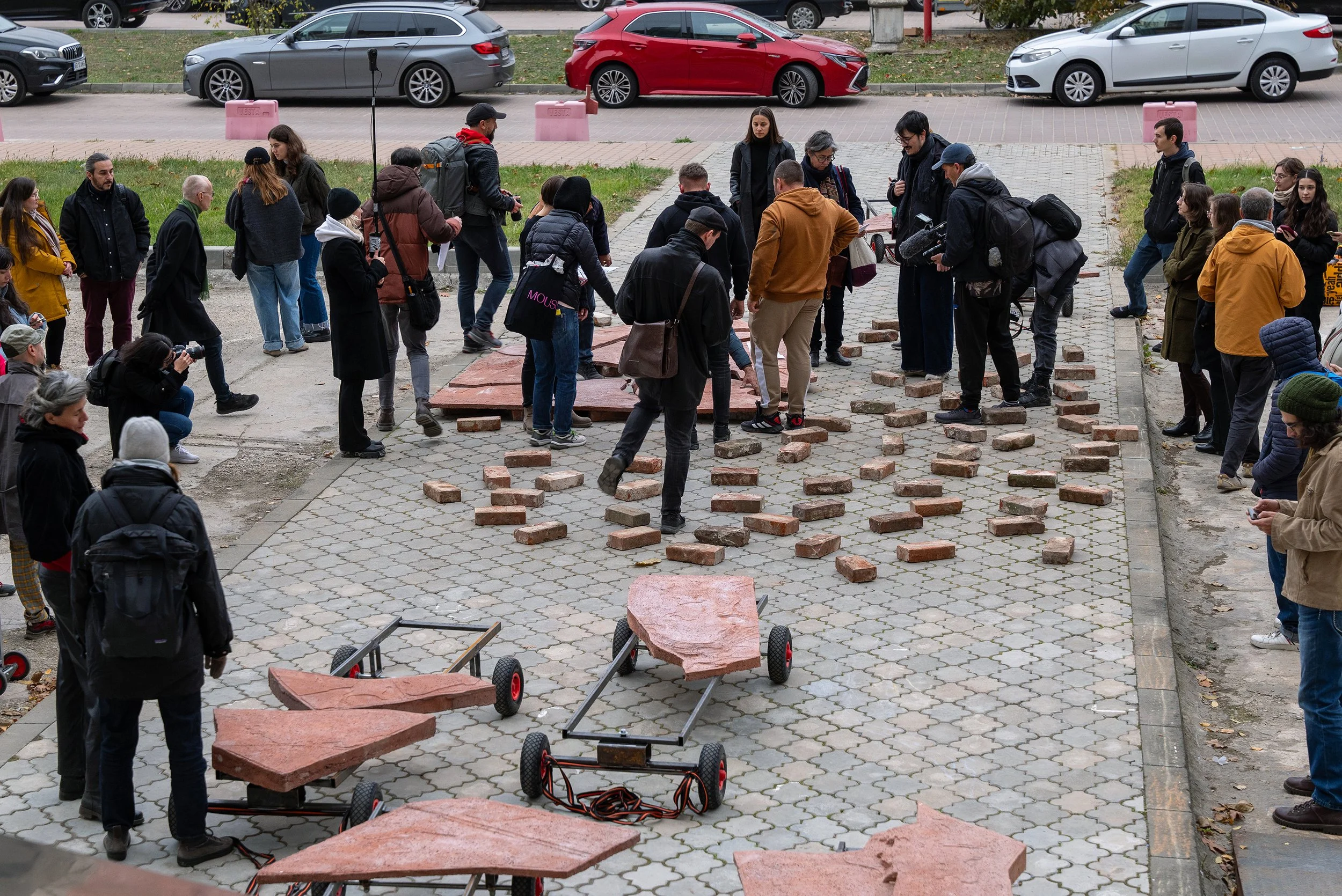
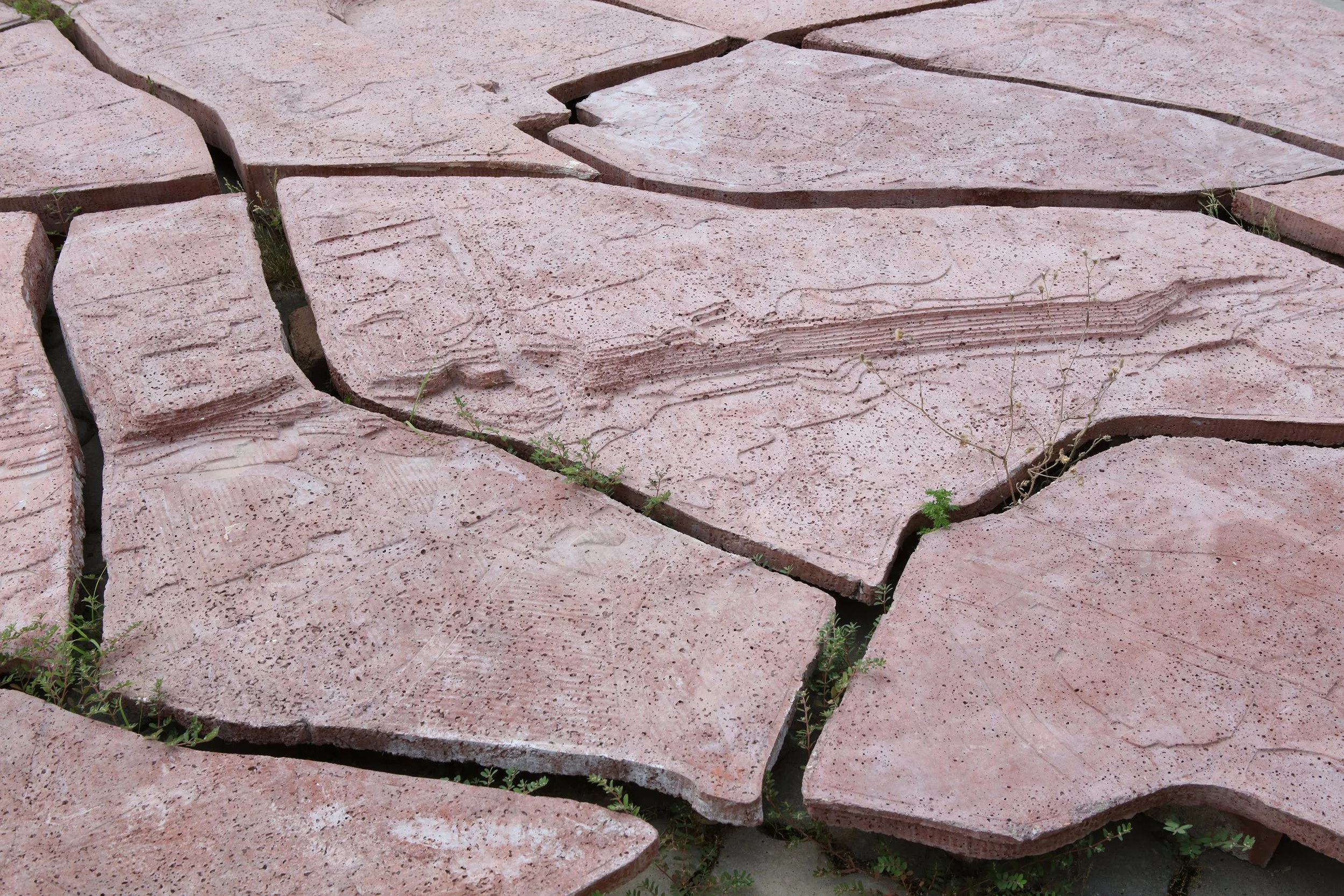
While the terracotta-coloured 'hill' remained outside, voices from the past resonated through the museum's passageways – a sound piece based on interviews with former inhabitants. Films document participatory actions in Izvor Park: a dinner on the site of a vanished house, film screenings, the making of the 'hill' and its journey through the city – ways of reimagining a once-inhabited space.
Left outside through winter, the object withstood the elements. In spring, cracks filled with spontaneously growing plants. The 'hill' became a living, resilient organism, a semi-permanent monument to the demolished districts.