Fragments of memory: Bucharest – Pompeii – London
Beaconsfield, London
residency, exhibition & performance
Concept & art direction Ioana Marinescu
Developed together with Smaranda Găbudeanu, Iulia Mărăcine & Naomi Siderfin
Collaborating artists Laurențiu Calciu, David Crawforth, Andreea David, Thomas Goodey, Hennie Lee, Katia Pascariu, Eliza Trefaș
Artistic consultants Hanna Gillgren, Phoebe von Held
Produced by PETEC
Commissioned by Beaconsfield
Mature Times article here
Exhibition, 22 July–12 August 2023
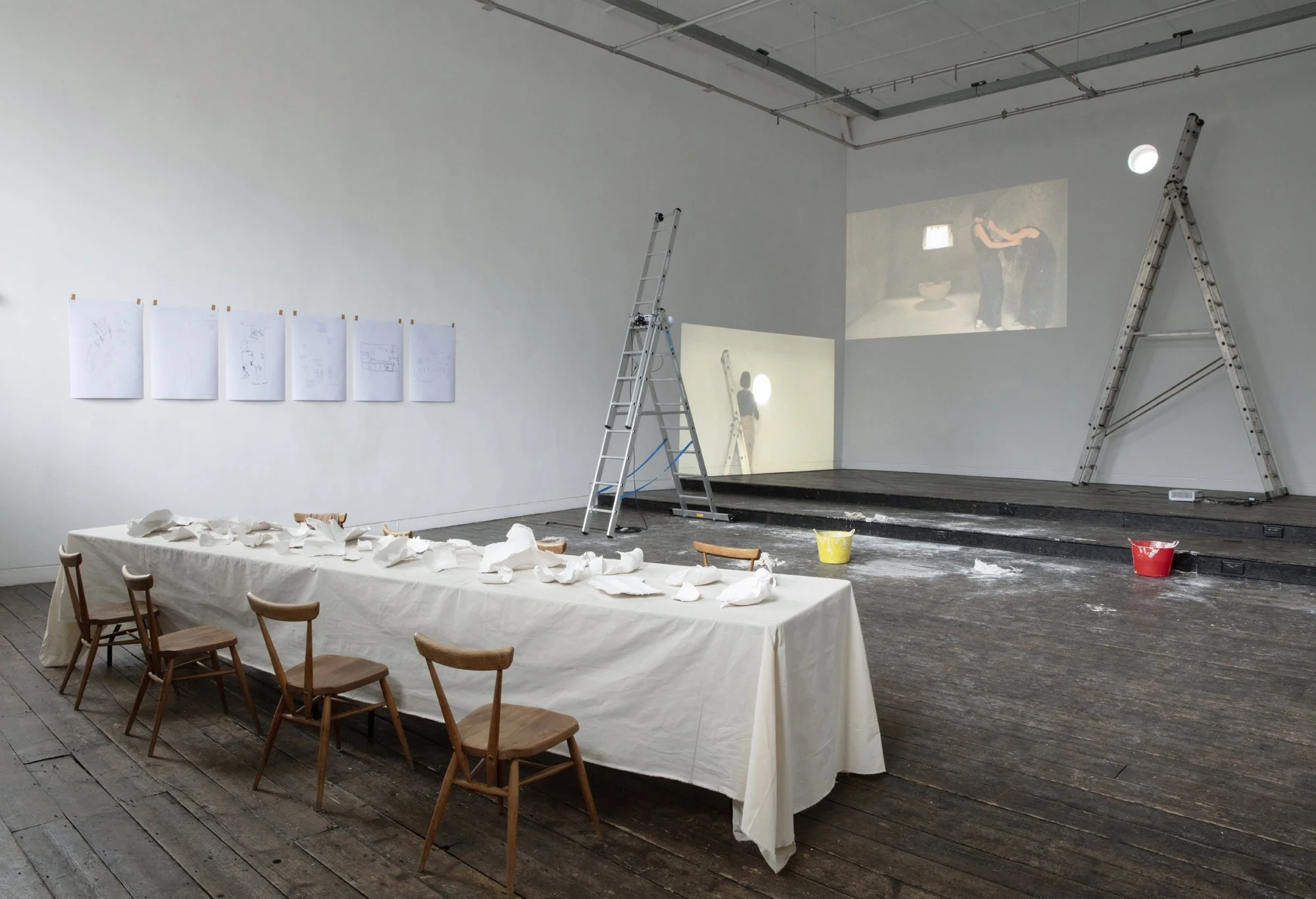
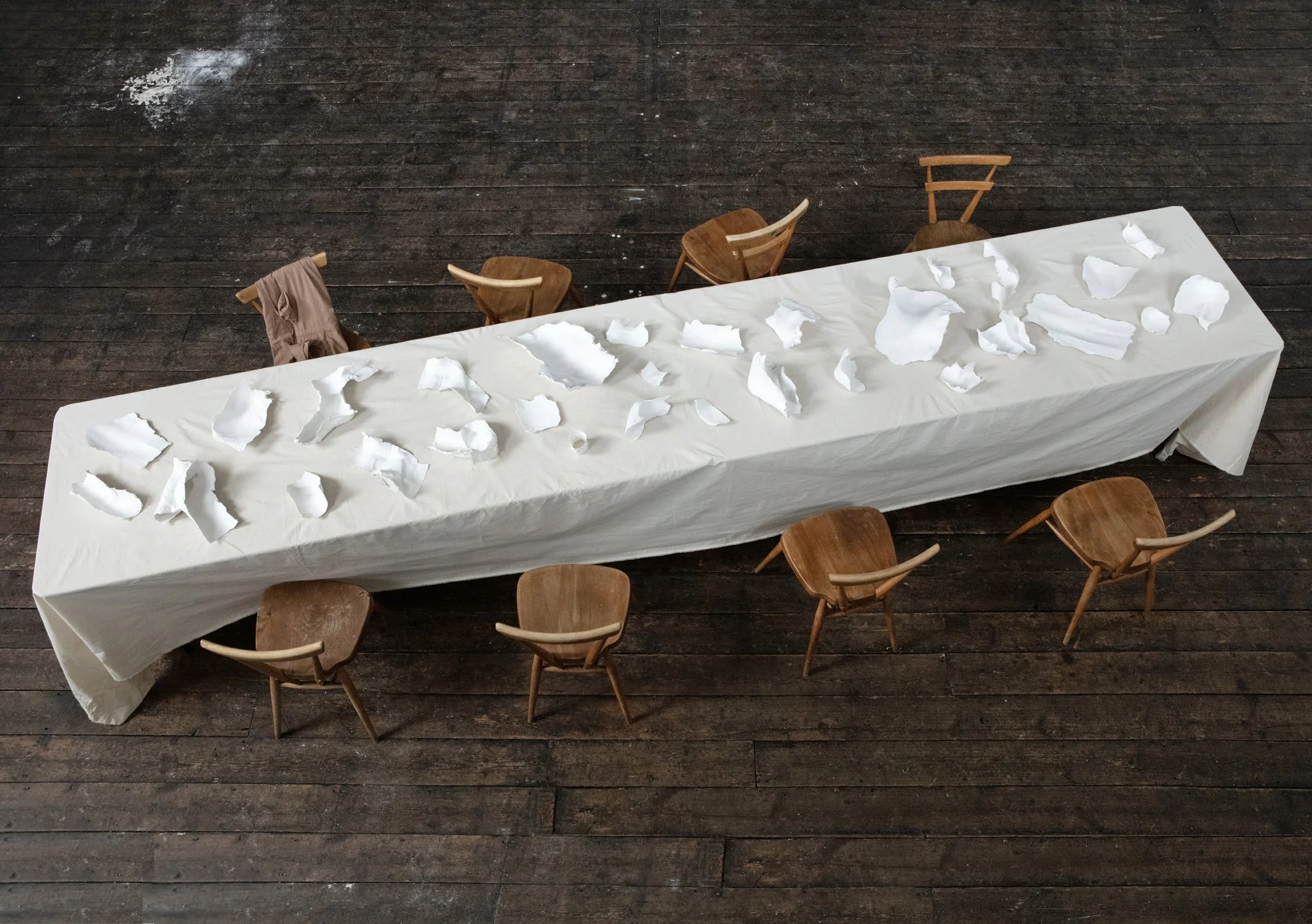
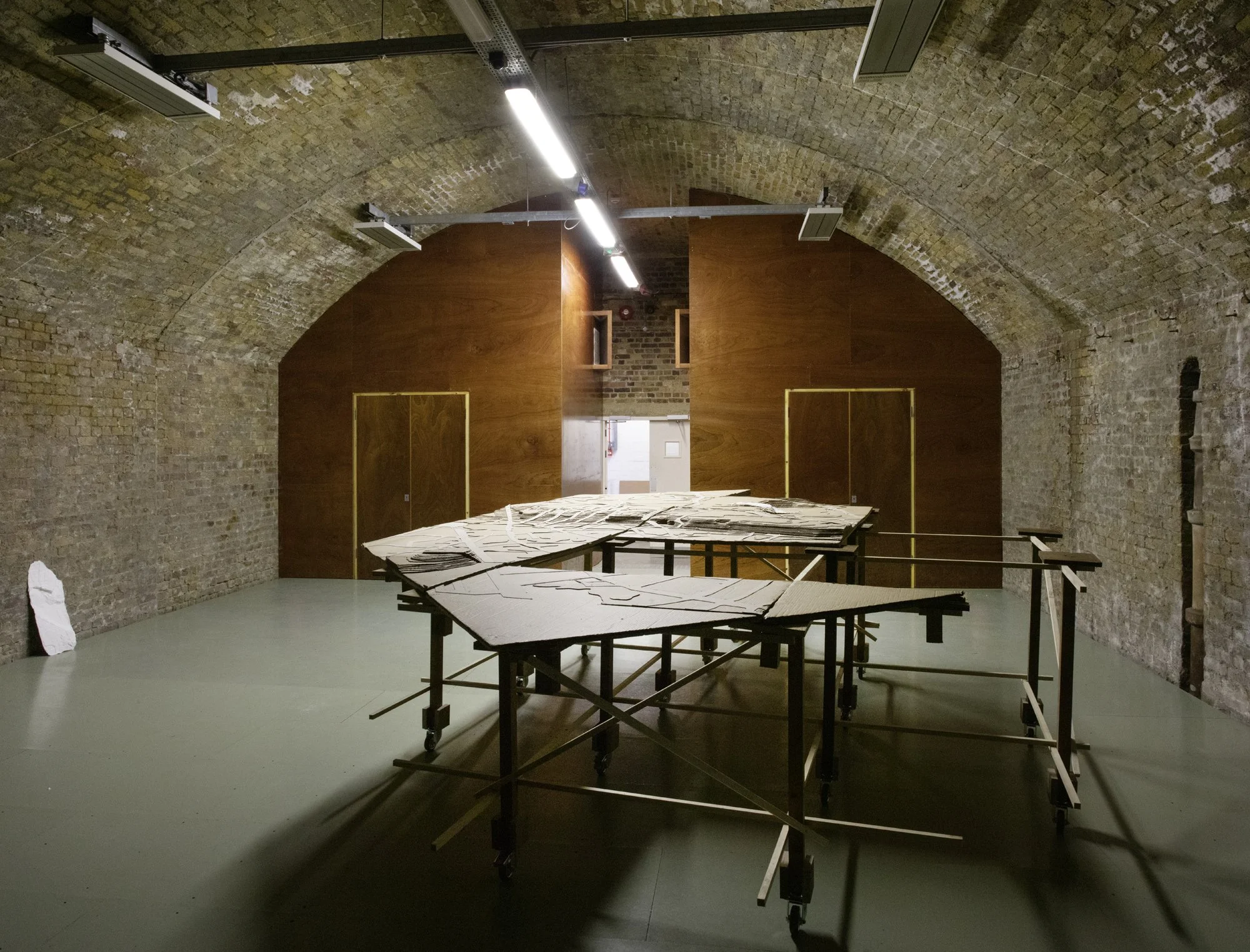
Brought to London from Bucharest, Paper Hill was placed on a mobile structure within the basement arch of Beaconsfield Gallery – reference to the train infrastructure above. Moved on wheels, the hill becomes as transient as the churches in Bucharest had become in the 1980s – displaced from their foundations and transported on railway tracks. Performers dressed in workers’ suits move the hill backwards and forwards, sometimes very slowly, sometimes violently. In exhibition mode, the model becomes a large sculptural object occupying the front of the room, whilst an out-of-focus archival photograph of a church on trucks is projected on the back screen. Recorded sound from the performance interferes with the sound of passing trains.
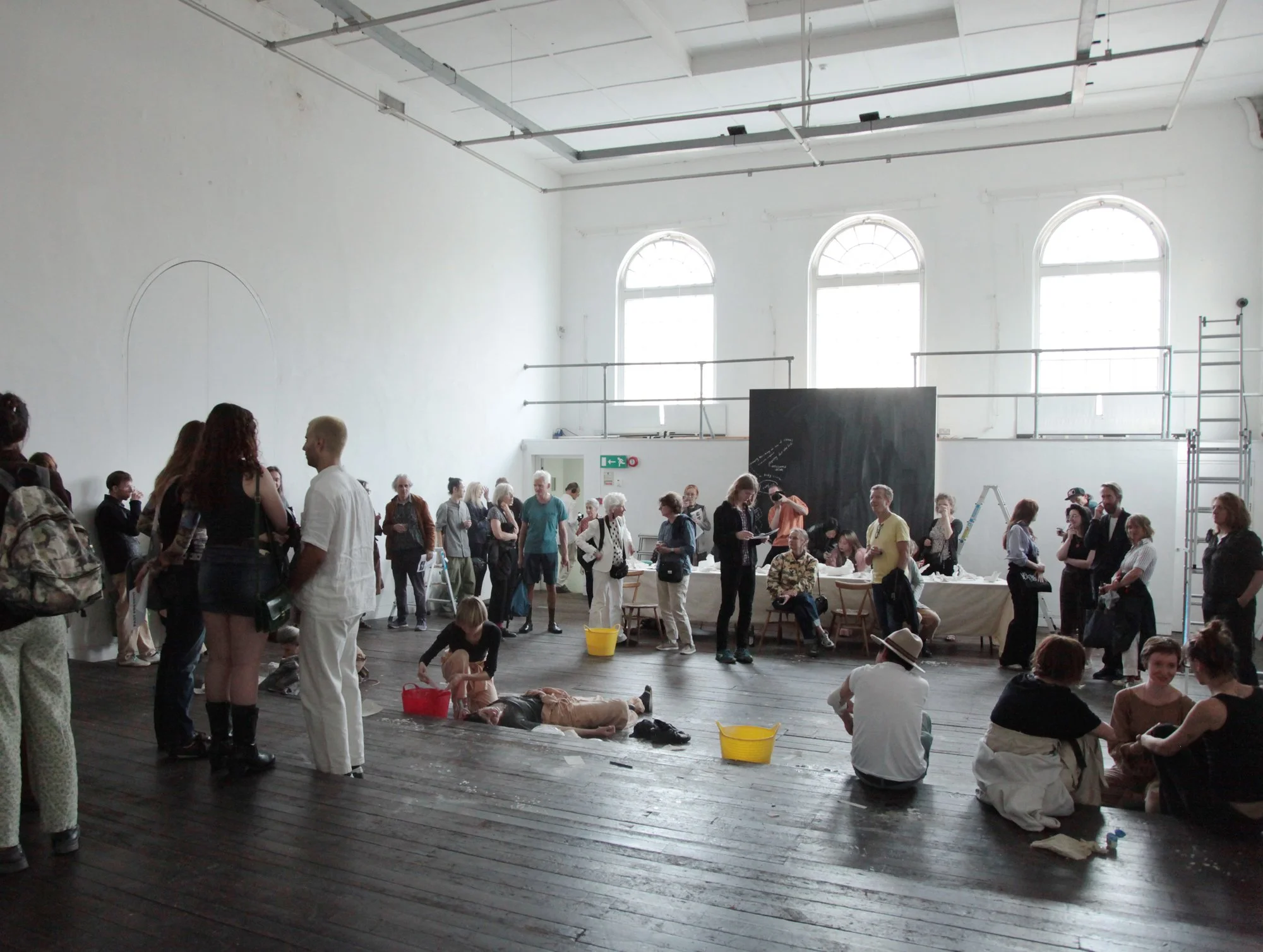
Performance, 21 + 22 July 2023
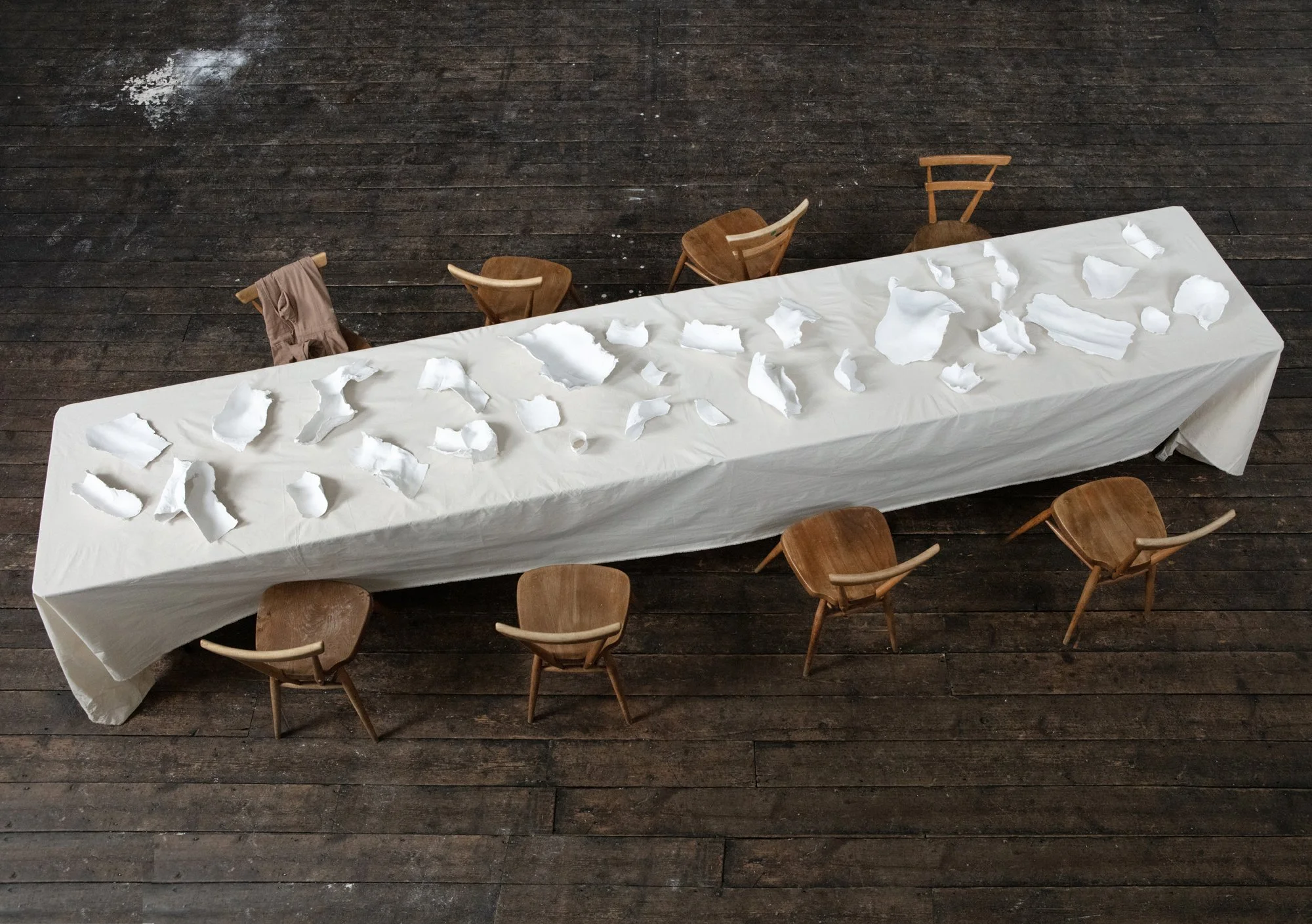
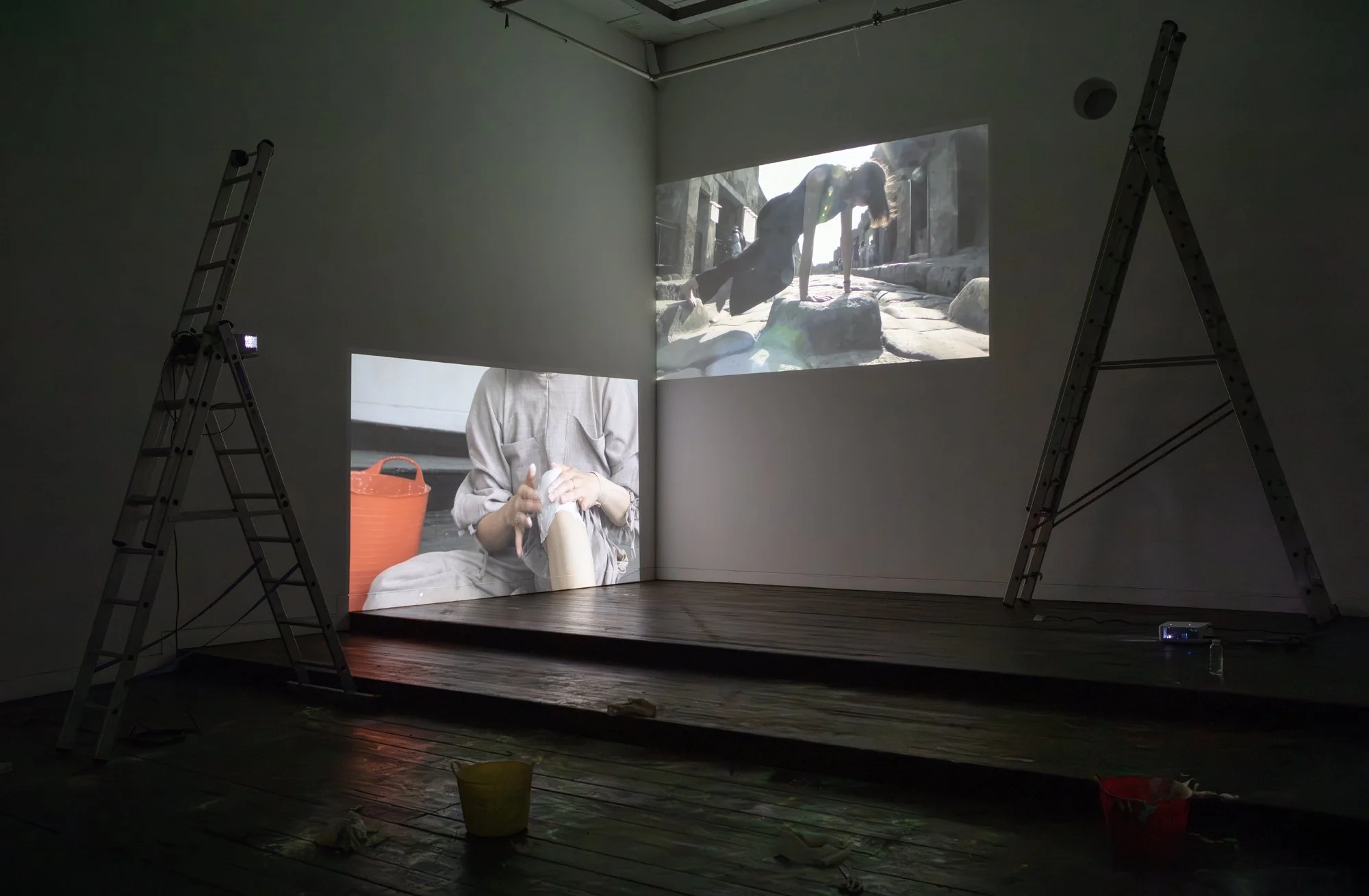
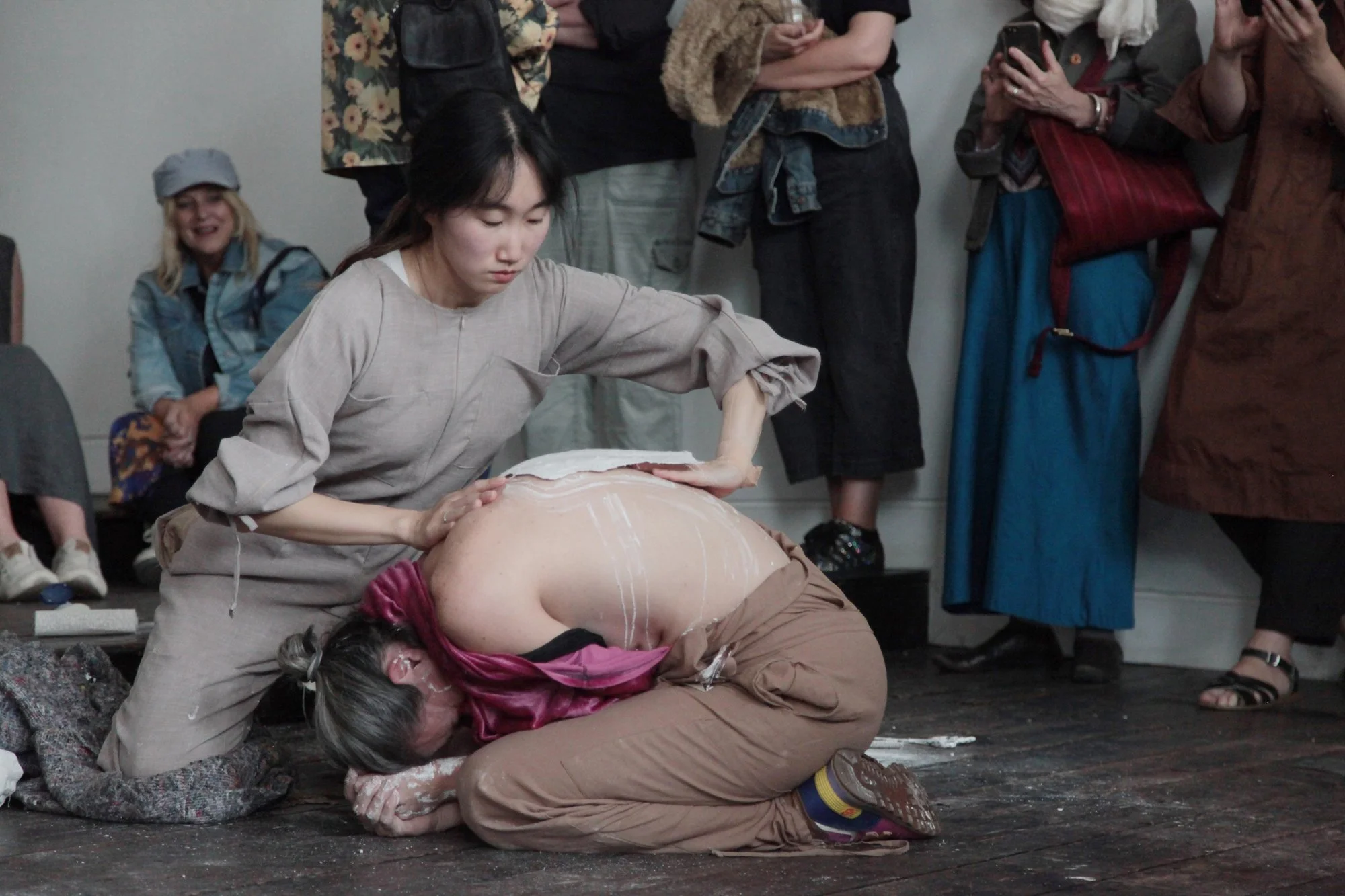
The mould is the imprint of an object on a surface, a negative of form, palpable memory. To the ancient Greeks, memory was the imprint on the soul of a past event. During the 19th-century archaeological excavations in Pompeii, plaster was poured into the holes created by the organic matter decomposed under the hardened ash and lava, revealing nearly one hundred reproductions of the bodies of men, women, children, and animals, trapped as if in an eternal sleep.
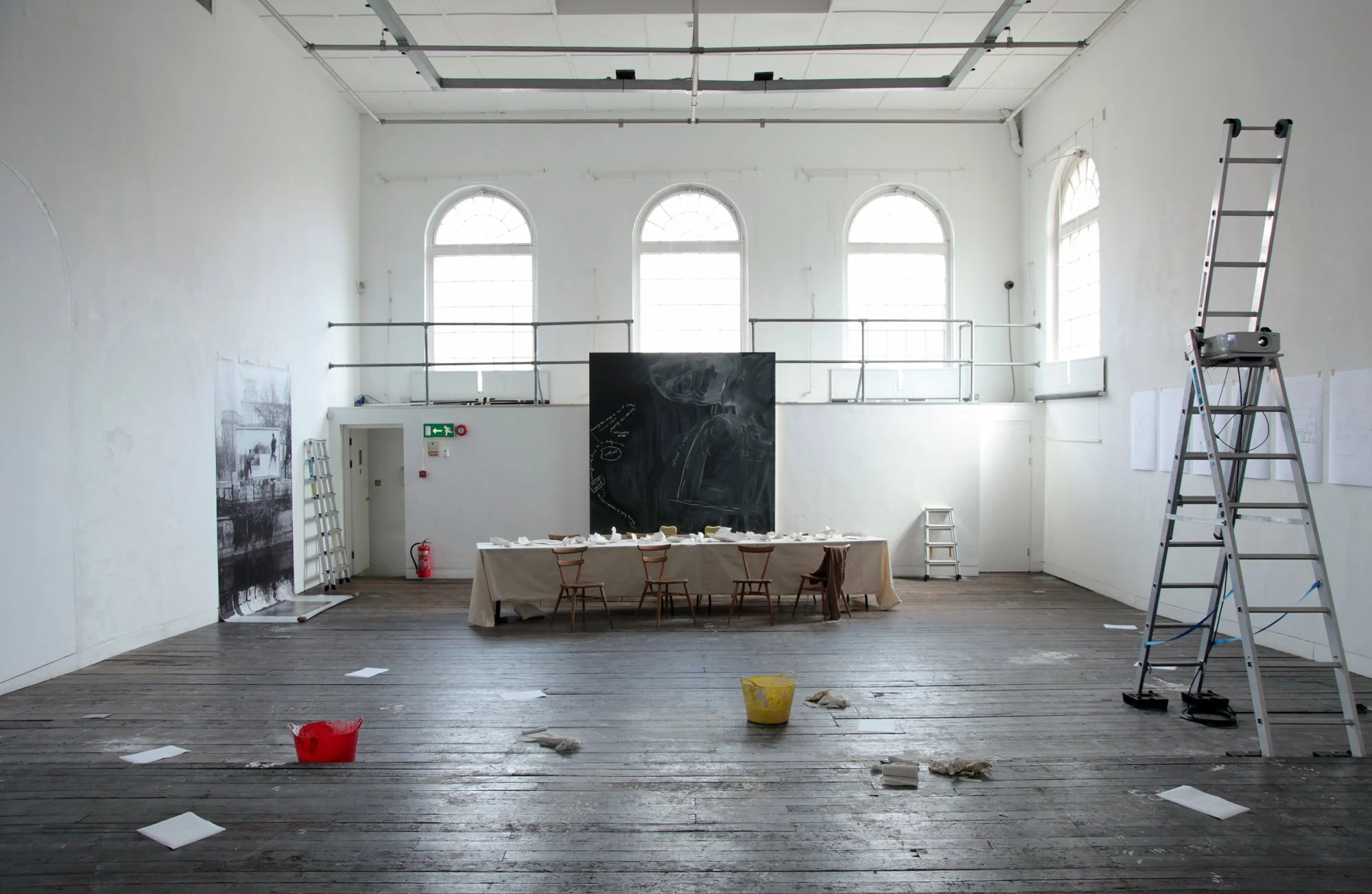
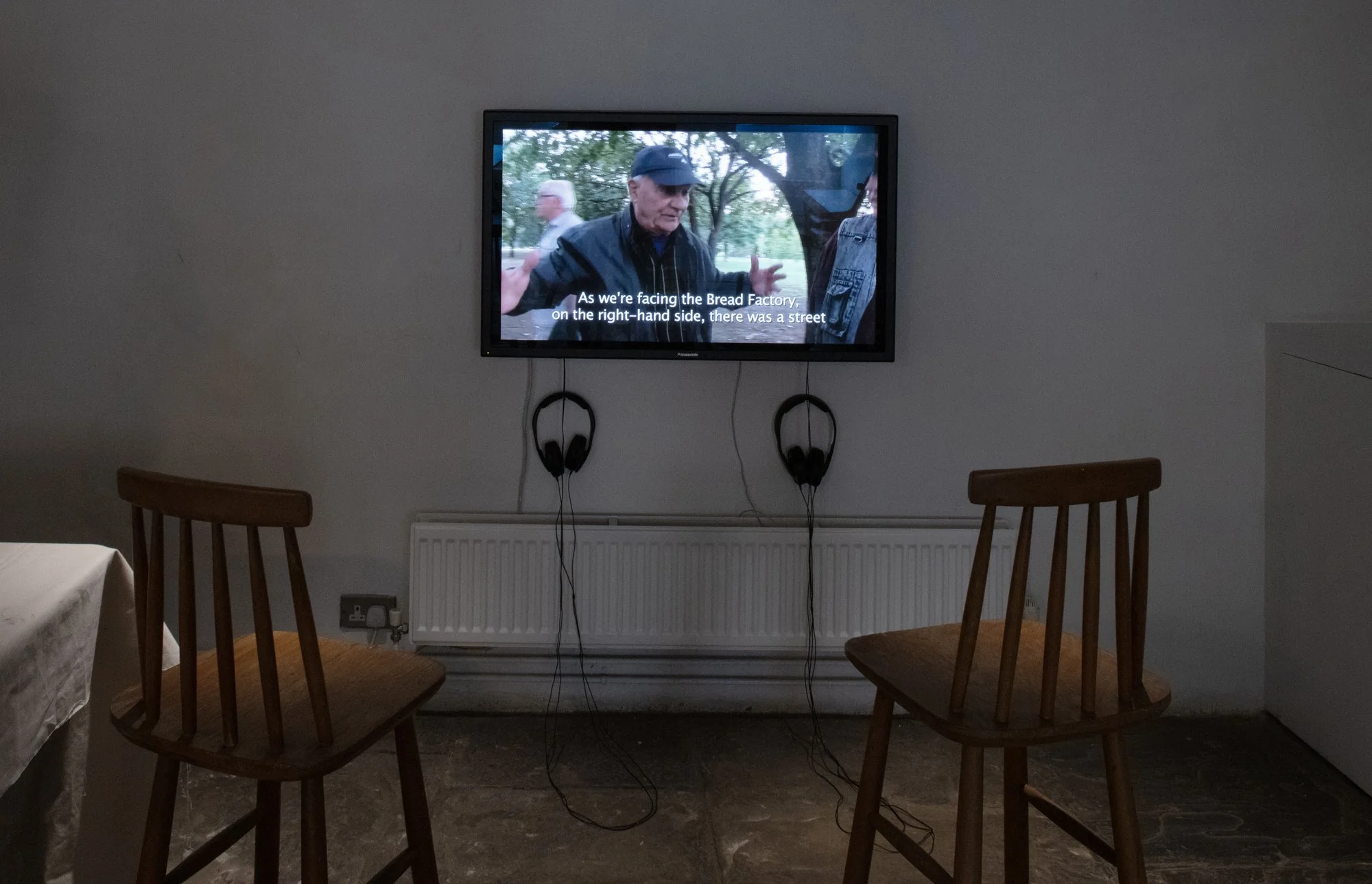
Nearly 2000 years later, in 1980s Bucharest, the only inhabitable hill in the city – the Arsenal Hill – is flattened by order of Nicolae Ceaușescu in order to make way for a gigantic building called ‘The People’s Palace’ and for the ‘Victory of Socialism Boulevard’. Unlike Pompeii, which is extraordinarily preserved, from Bucharest we hardly have any tangible evidence left – only the stories of the witnesses and a few photographs. In pursuit of these fragile, fragmented memories, we collect interviews and memory drawings, we discover photographs and small objects. We invite former inhabitants to tell their stories over collective meals set in Izvor Park, on the site of the demolished former districts.
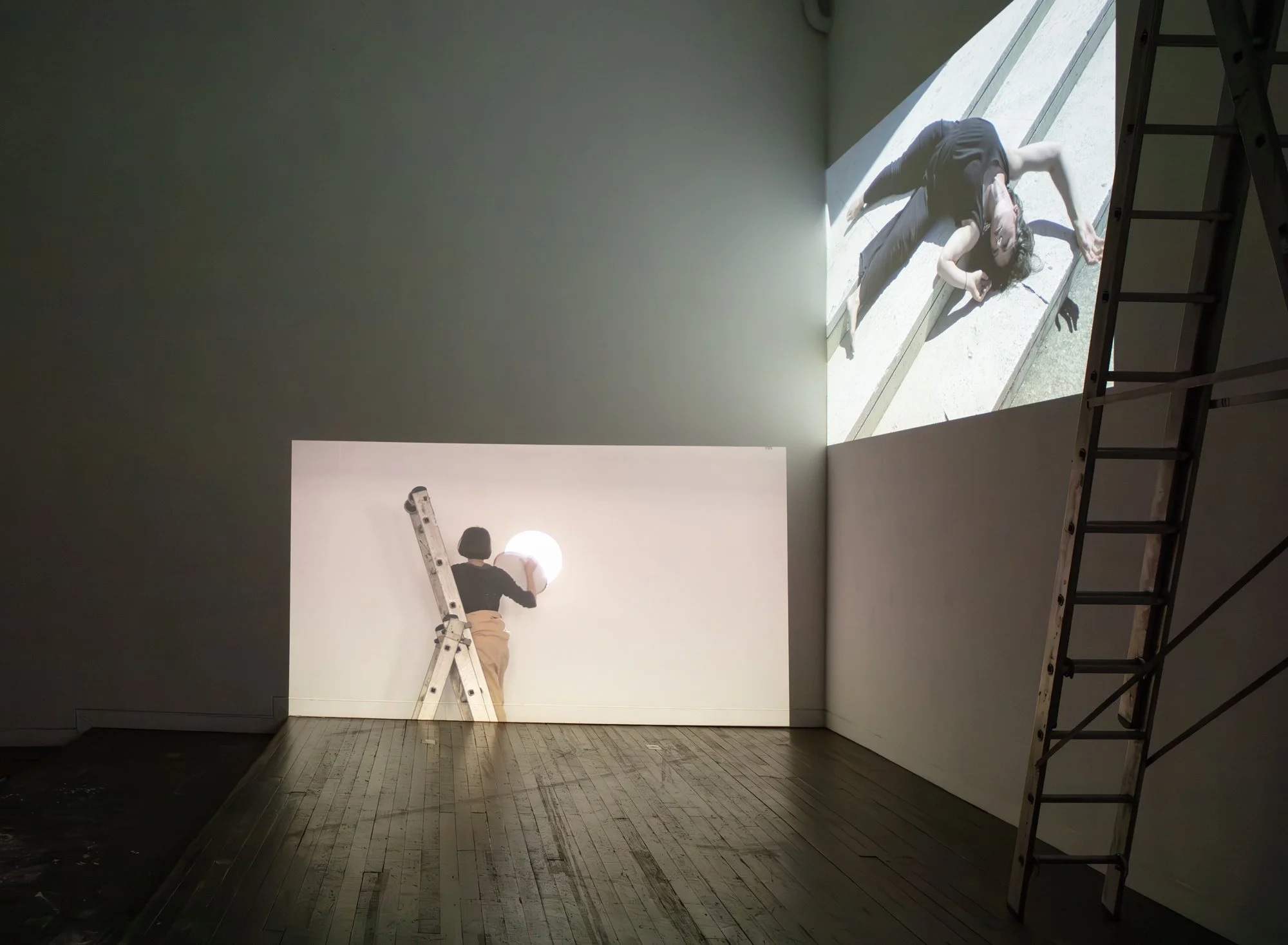
The performers' bodies negotiate time, from the geological time of Pompeii to the fast, indifferent rhythms of the present. New plaster moulds of body parts take shape as negative spaces where memory becomes tangible. Drawings are re-imagined in the former classroom space of Beaconsfield - a former Ragged School which lost two thirds of the building to the expansion of the railway. The connections between these ‘crumbs’ of personal and collective memories are revealed through fragments of spoken language.

Photos: Thomas Beck, Ellis Parkinson